The Automation Era Is Here: How Intelligent Machines Are Redefining Work, Wealth, and the Future of Human Potential
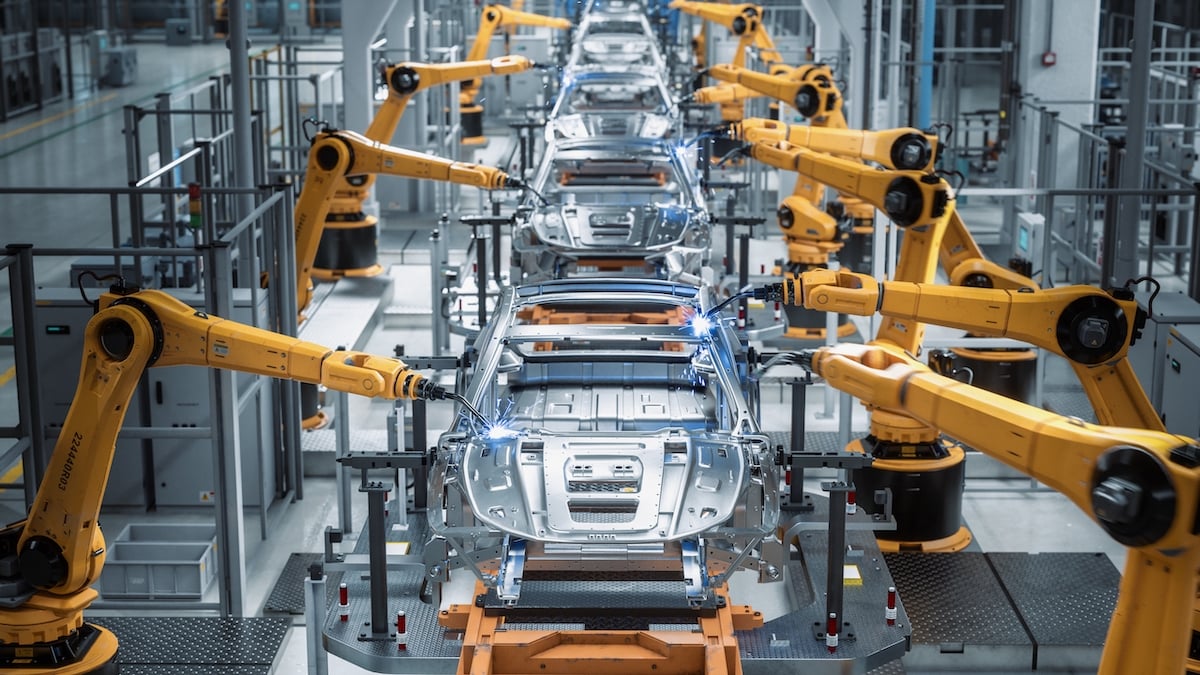
Automation is no longer an incremental efficiency upgrade. It is a structural shift redefining how industries operate, how labor is allocated, and how competitive advantage is built. What began as mechanized assistance in factories has evolved into intelligent, autonomous systems capable of perception, reasoning, and real-time decision-making. The automation era is not approaching—it is here.
From Mechanization to Intelligence
Earlier waves of automation focused on mechanical repetition. Assembly lines and programmable logic controllers optimized physical production tasks. The objective was throughput and cost reduction.
Today’s automation is fundamentally different. It integrates artificial intelligence, computer vision, natural language processing, and predictive analytics. Modern systems do not merely execute predefined instructions; they adapt. They learn from data streams, adjust to environmental variability, and refine performance over time.
In manufacturing, robotic systems dynamically recalibrate production based on demand forecasts. In logistics, automated sorting centers operate with near-continuous uptime. In financial services, algorithmic systems process transactions, detect anomalies, and execute trades without human intervention.
Automation has evolved from rigid scripting to cognitive autonomy.
Operational Leverage at Scale
The defining characteristic of the automation era is leverage. A single optimized system can replace layers of manual oversight. Businesses now scale output without proportional increases in labor or infrastructure.
Companies such as Amazon deploy autonomous robots across fulfillment centers, reducing pick-and-pack latency while increasing accuracy. Automotive leaders like Tesla integrate advanced robotics and AI-driven quality control into production lines to minimize defects and accelerate manufacturing cycles.
In banking, institutions including JPMorgan Chase use robotic process automation (RPA) to review legal documents and compliance data at speeds unattainable by human teams. What once required weeks of manual review can now be completed in hours.
Automation transforms fixed costs into scalable infrastructure.
The Reconfiguration of Labor
The automation era does not eliminate work; it redefines it. Task-based roles shrink while oversight, systems design, and optimization roles expand. Human contribution shifts from execution to orchestration.
Repetitive cognitive tasks—data entry, reconciliation, reporting—are increasingly handled by intelligent software agents. Meanwhile, new demand emerges for machine learning engineers, systems integrators, data governance specialists, and cybersecurity analysts.
The labor market is bifurcating. High-skill, high-adaptability roles gain value. Static, process-bound roles face displacement. Organizations that proactively reskill their workforce mitigate disruption and maintain institutional continuity.
The strategic question is not whether automation replaces jobs, but whether companies evolve faster than their operational inertia.
Speed as a Competitive Variable
Automation compresses operational timelines. Supply chains now function through predictive inventory models that adjust procurement automatically. Customer service platforms resolve inquiries using AI-driven chat systems before human escalation becomes necessary.
This acceleration reshapes consumer expectations. Real-time service becomes baseline rather than premium. Delays are perceived as systemic weakness.
Technology leaders such as Google and Microsoft embed automation deeply into cloud platforms, enabling enterprises to deploy self-scaling infrastructure, automated security monitoring, and continuous integration pipelines.
Time, once a constraint, becomes programmable.
Autonomous Systems in the Physical World
Perhaps the clearest signal that the automation era has matured is the deployment of autonomous systems beyond controlled environments.
Self-driving technologies developed by firms like Waymo demonstrate that machine perception can rival human reflexes under defined conditions. In agriculture, autonomous tractors and drone systems optimize planting, irrigation, and crop monitoring with precision analytics.
Warehousing, mining, maritime shipping, and even construction increasingly rely on automated heavy equipment guided by AI-enhanced sensors. These systems operate with reduced error margins and extended uptime, improving safety and productivity simultaneously.
The boundary between digital automation and physical automation is dissolving.
Economic Implications
Automation alters cost structures across sectors. Marginal production costs decline as systems scale. Variable labor expenses convert into capital investment in software and robotics. Firms that achieve early automation maturity often widen profit margins while competitors struggle to match operational efficiency.
However, automation also intensifies market concentration. Enterprises with sufficient capital to deploy large-scale automation gain compounding advantages. Smaller firms must adopt automation strategically to remain viable.
Productivity gains at the macroeconomic level can increase GDP output, but income distribution effects require policy adaptation. Governments and institutions must reconsider workforce training, social mobility pathways, and regulatory oversight.
Automation is not merely technological—it is economic and societal.
Risk, Governance, and Resilience
As automation expands, systemic risk increases. Overreliance on autonomous systems without adequate fail-safes introduces vulnerability. A misconfigured algorithm can cascade across networks, amplifying disruption.
Cybersecurity threats evolve alongside automation sophistication. Automated systems become targets for adversarial exploitation. Data integrity, system redundancy, and auditability become mission-critical design principles.
Regulatory frameworks are evolving to address these realities. Standards for explainability, operational transparency, and accountability are emerging across jurisdictions. Organizations must incorporate governance into system architecture from inception rather than as an afterthought.
Resilience becomes a design requirement, not an operational patch.
Strategic Imperative
The automation era rewards decisive execution. Companies that experiment cautiously yet implement decisively outperform those trapped in perpetual pilot programs. Automation must integrate across core functions—finance, operations, marketing, logistics—rather than exist in isolated innovation labs.
Leadership teams must align automation initiatives with long-term strategic objectives. Cost reduction alone is insufficient. Competitive differentiation, speed-to-market, and customer experience optimization define sustainable automation value.
Enterprises that treat automation as infrastructure—embedded, scalable, continuously optimized—build enduring advantage.
The automation era has officially begun because the technology threshold has been crossed. Intelligent systems are reliable, scalable, and economically viable. They augment human capability, compress timelines, and redefine operational architecture.
Organizations now face a binary trajectory: integrate automation deeply or risk strategic erosion. The future enterprise will be hybrid—human-directed, machine-executed, data-optimized.
Automation is no longer a tactical upgrade. It is the new baseline of business.
Comments
Post a Comment