
Learning how to become more productive every day isn’t about cramming more tasks into your schedule. True productivity is about maximizing meaningful output while minimizing wasted energy, distraction, and cognitive overload.
High performers don’t rely on motivation. They rely on systems.
This guide breaks down the psychology, structure, and daily frameworks you can use to increase focus, improve time management, reduce procrastination, and execute consistently.
What Productivity Really Means
Productivity is not busyness.
It is:
Output aligned with important goals.
Answer this first:
What results actually matter in your life?
What tasks drive those results?
Without clarity, effort becomes scattered.
Step 1: Identify Your “High-Leverage” Activities
Not all tasks are equal.
Apply the 80/20 Principle (Pareto Principle):
20% of your actions generate 80% of your results.
Ask:
What activities move my career forward?
What generates income?
What improves health?
What builds long-term growth?
Eliminate low-value work.
Step 2: Use Time Blocking
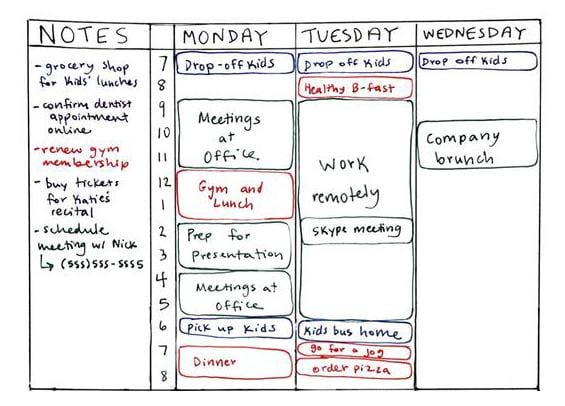
Time blocking assigns tasks to specific time slots in your calendar.
Instead of a to-do list that grows endlessly, you schedule:
Deep work sessions
Meetings
Exercise
Learning
Breaks
Time blocking reduces decision fatigue and increases accountability.
Step 3: Start With a “Power Hour”
The first hour of your day sets momentum.
Avoid:
Social media
Email checking
News scrolling
Instead:
Work on your most important task
Focus on deep, uninterrupted effort
Protect this time aggressively
Many high performers follow variations of deep work principles popularized by Cal Newport.
Step 4: Prioritize Deep Work Over Shallow Work
Deep work = cognitively demanding, meaningful tasks.
Shallow work = low-effort administrative tasks.
Examples of deep work:
Writing
Coding
Strategy planning
Creative development
Examples of shallow work:
Email replies
Slack messages
Routine paperwork
Schedule deep work during peak mental hours.
Step 5: Use the 2-Minute Rule
Popularized by productivity expert David Allen:
If a task takes less than 2 minutes, do it immediately.
This prevents small tasks from accumulating into mental clutter.
Step 6: Eliminate Digital Distractions
Modern productivity suffers due to constant notifications.
Practical steps:
Turn off non-essential notifications
Keep phone out of reach during work
Use website blockers
Close unused browser tabs
Focus is a competitive advantage in 2026.
Step 7: Plan Tomorrow the Night Before
Before ending your workday:
List your top 3 priorities for tomorrow
Prepare materials in advance
Set your calendar blocks
This removes morning indecision.
Step 8: Optimize Energy, Not Just Time
Productivity depends on energy management.
Improve:
Sleep (7–9 hours)
Nutrition
Hydration
Exercise
Stress levels
Without energy, even the best systems fail.
Step 9: Use the “Rule of Three”
Every day, choose:
3 major outcomes
Everything else is secondary
If you complete those three tasks, the day is successful.
This simplifies overwhelm.
Step 10: Batch Similar Tasks
Context switching reduces efficiency.
Batch:
Emails
Calls
Errands
Administrative tasks
Content creation
Switching between unrelated tasks drains cognitive resources.
Step 11: Track Your Time for One Week
Most people underestimate time loss.
Track:
Social media usage
Meetings
Work sessions
Breaks
Awareness alone often improves discipline.
Step 12: Use Technology Intentionally
Digital tools can increase productivity when used strategically.
Popular tools include:
Notion
Trello
Todoist
Choose one system. Avoid overcomplicating your workflow.
Step 13: Build Daily Routines
Routines reduce reliance on willpower.
Examples:
Morning Routine:
Wake up at consistent time
Light movement
Review goals
Deep work session
Evening Routine:
Review progress
Plan next day
Digital shutdown
Consistency creates momentum.
Step 14: Apply the 90-Minute Focus Cycle
Research suggests the brain operates in roughly 90-minute focus cycles.
Work intensely for 60–90 minutes.
Then take a 10–20 minute break.
Short breaks improve sustained productivity.
Step 15: Learn to Say No
Productivity increases when you protect your schedule.
Ask:
Does this align with my goals?
Is this high leverage?
Can someone else handle this?
Every “yes” costs time.
Common Productivity Mistakes
Multitasking
Overloading daily goals
Working without breaks
Chasing motivation
Ignoring sleep
Checking email first thing
Productivity is strategic elimination, not addition.
The Psychology Behind Daily Productivity
Productive individuals focus on:
Clarity
Focus
Execution
They reduce friction.
They remove decision overload.
They operate from structure, not chaos.
A Simple Daily Productivity Framework
Morning:
Power hour (deep work)
No distractions
Midday:
Meetings and collaboration
Shallow tasks
Afternoon:
Second focused session
Task batching
Evening:
Plan tomorrow
Disconnect
Repeat consistently.
How Long Does It Take to See Results?
Within 7–14 days of structured effort, you’ll likely notice:
Reduced overwhelm
Increased clarity
Higher task completion
Better time awareness
Within 60–90 days, productivity habits become automatic.
Discipline Over Motivation
Becoming more productive every day is not about grinding nonstop. It’s about intentional execution.
You don’t need:
16-hour workdays
Complex apps
Extreme routines
You need:
Clear priorities
Structured time
Controlled distractions
Consistent habits
Productivity compounds.
Small daily improvements lead to significant long-term results.
Start with one system today. Protect your focus. Execute consistently.
Over time, productivity becomes not something you chase — but something you embody.
Comments
Post a Comment